From reuters.com:
Study sheds light on how Down’s prevents cancer | Health | Reuters

Monmouth is to be one of the beneficiaries of the Sustrans connect2 scheme after the project was the winner of the People’s £50 Million Lottery Giveaway recently. The scheme aims to provide cycle and foot paths into town across the Wye and Monnow rivers, going some way to restoring the town’s connection with these rivers.
Connect2 – Schemes – Monmouth: Local Connections
This BBC report is a really encouraging piece about an art school in Mexico for people with Down’s Syndrome. The quality of the art is very impressive. I want some on my wall!
Also remarkable is the interview with one of the artists, who is clearly bilingual. It’s depressing to think that not so long ago he might have been locked away in an institution from birth.
BBC News Player – Down’s art exhibition tour
Technorati Tags: down’s down syndrome
Over the last ten years or so, I’ve been noticing changes in the words that speakers of British English use. Some of those changes are due to the adoption of American English words, others are simply through misunderstanding. Here is an utterly subjective and unscientific survey of some of the changes that I have noticed. Before I am accused of being a curmudgeon, I accept that language is always evolving, so to complain about all of them is pointless. One or two of the changes, however, do seem to me excessively PC or depressingly indicative of lowered educational standards.
Will all these words still be in common British English usage ten years from now?
Technorati Tags: language, linguistics, English, words, etymology

A sign in one of Monmouth’s main car parks states that Monmouthshire County Council “excepts no liability” for loss or damage to property. So if it excepts no liability does that mean that it accepts all liabilities?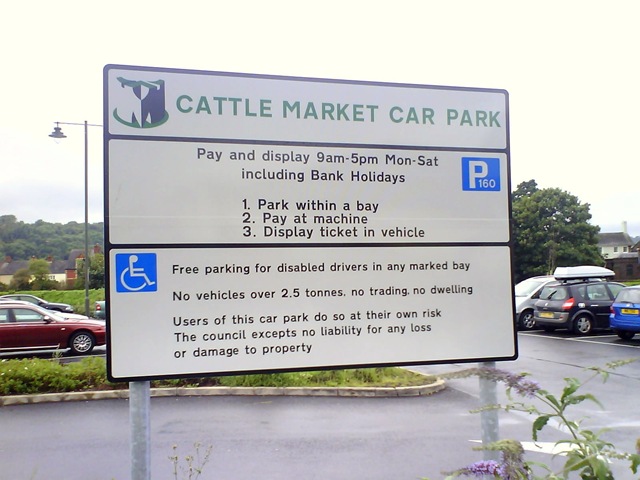
Technorati Tags: Monmouth, Monmouthshire, Wales, English, signs, spelling, typo, language
This is a bizarre story from 2004 that has recently resurfaced in a government report leaked to Italian newspapers.
Aliens caused Sicily fires, say officials – Telegraph
Technorati Tags: ufos, italy, sicily
I’m not one for causes and campaigns generally, but this is something I’m happy to endorse.
YouTube – Hugh makes personal appeal
Technorati Tags: food, chicken, video
An interesting interpretation of the enigmatic film “2001: A Space Odyssey”.
Kubrick 2001: The space odyssey explained
Technorati Tags: 2001, kubrick, film, cinema

As I ran for cover in a heavy rainstorm in Neuruppin, Germany, I passed this bust of Karl Marx.

Image via Wikipedia
This article in Vanity Fair is a poignant reminder that even people who have earned the respect of millions can react with fear when one of their children is born with Down’s Syndrome.
Arthur Miller’s Missing Act: Fame & Scandal: vanityfair.com
Technorati Tags: Down’s Syndrome, Down Syndrome, Arthur Miller

Musings on biblical studies, politics, religion, ethics, human nature, tidbits from science
summarized & visualized
The author of How to Think Like a Roman Emperor
Professor of Philosophy & Pedagogy
Community Woodland Information
Between An Island of Certainties and the Unknown Shore
 Monnow Man